Tax rise to pay for NHS boost — Hunt
 Image copyright Getty Images
Tax rises will be needed to pay for the boost in NHS funding announced by the government, the health secretary says.
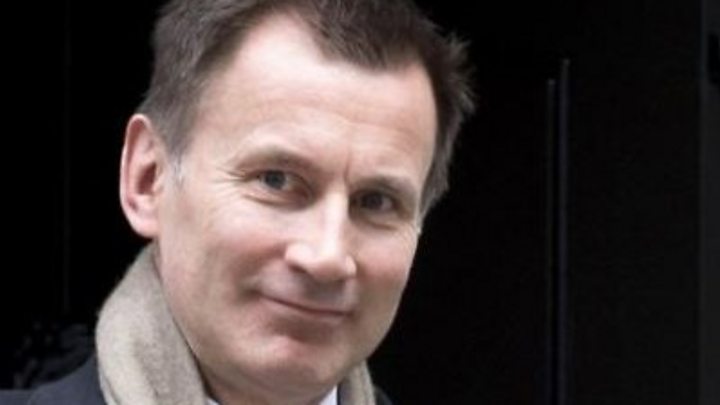
Jeremy Hunt said there would have to be an "increased burden of taxation" to fund the 3.4% average annual rises in NHS England's budget over five years.
The rise means spending will be £20bn higher by 2023, with Mr Hunt saying tax will be used alongside any savings from Brexit and economic growth.
Labour's John McDonnell called the funding model "not credible".
- NHS at 70: Share your stories and memories
- 10 charts that show why the NHS is in trouble
- Does the Brexit dividend actually exist?
The plan means more money will also be given to the rest of the UK - about £4bn - although it will be up to the Welsh and Scottish governments to decide how that is spent.
But as it just covers NHS England's budget, it does not include spending on training staff or prevention services, such as stop smoking clinics and obesity programmes, so the overall "health" increase might be lower than 3.4%.
The average annual rise since the foundation of the NHS in 1948 is 3.7%.
Speaking to the BBC, Mr Hunt said the "exact details" of how the increase would be funded "will be announced in the budget".
But he said it had been agreed on the basis that funding would come from three sources - Brexit, economic growth and the taxation system.
Mr Hunt did not spell out what that could mean for taxes - but to increase the burden of taxation governments can increase tax rates, extend what is included in taxes, such as increasing the goods and services VAT is applied to, or change the thresholds at which tax is charged.
Referring to Brexit, Mr Hunt said: "We won't be paying subscriptions to Brussels... but that alone won't be anything like enough."
 Media playback is unsupported on your device
His comments come after Prime Minister Theresa May was criticised for suggesting a "Brexit dividend" would be used to partially pay for the increase in funding.
Shadow chancellor Mr McDonnell said: "The speculation about where it's coming from, particularly the Brexit dividend, is just not credible as far as many commentators are saying."
There has also been criticism from within her own party as well.
The Conservative chair of the Commons' Health and Social Care Committee, Sarah Wollaston, said the idea of a Brexit dividend was "tosh".
And Paul Johnson, director of economic think-tank the Institute for Fiscal Studies, said the only way the rise could be paid for was by an increase in taxes.
He said the financial settlement with the EU, plus the UK's commitments to replace EU funding, "already uses up all of our EU contributions" for the next few years.
Analysis
By Hugh Pym, BBC health editor
It was a significant funding announcement - few at senior levels in the NHS in England disagree with that.
But as the dust settles after the weekend, several unanswered questions are still hanging in the air.
What about the areas of health which are not covered? What about investment in hospital buildings and equipment? How will it be paid for?
Read more from Hugh
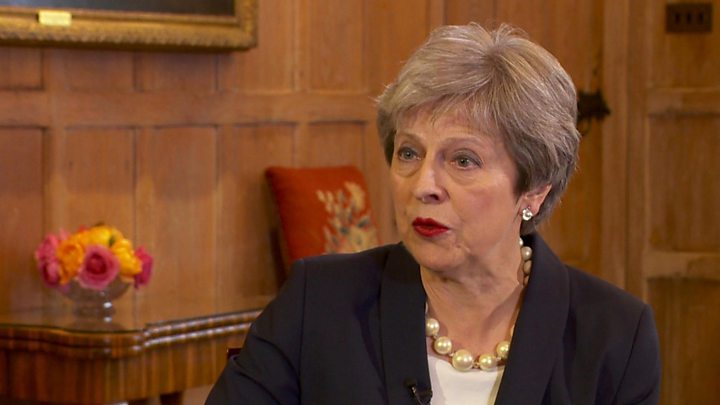
Mrs May did not rule out tax rises, and there will be much interest in what she says about that in a speech later on Monday.
The PM will also fill in some of the details on her proposed 10-year plan for the NHS, which she will say must ensure "every penny is well spent".
"It must be a plan that tackles waste, reduces bureaucracy and eliminates unacceptable variation," she will say.
Mrs May has asked NHS England boss Simon Stevens to help draw up the plan with the input of senior staff working in the health service.
Work on the plan will get under way almost immediately, with final proposals expected towards the end of the year.
Four main areas of improving the efficiency of the NHS will be looked at:
- The workforce
- Technology
- Buildings
- Productivity
The plan will build on the five-year strategy Mr Stevens set out in 2015.
A big part of that was shifting care out of hospitals and into the community.
Mrs May is known to be keen to see a specific stress on mental health and improving cancer survival rates this time.
The PM will also recall her own reliance on the NHS for help when she was diagnosed with type one diabetes, saying: "I would not be doing the job I am doing today without that support."
 Media playback is unsupported on your device
Meanwhile, councils have questioned why the funding announcement did not also include more money for social care and public health, which covers everything from stop smoking services to obesity prevention.
Both are considered essential to the sustainability of the NHS, but the increase announced only applied to front-line NHS services such as hospitals, GPs and mental health care.
Councillor Izzi Seccombe, of the Local Government Association, said: "Without essential council services, which help people live healthy lives in their own homes and communities, the NHS cannot thrive."
Read more from Nick
Follow Nick on Twitter